Mirage of My Dreams

I am a tree from a bird’s eye view.

If mother tree sees me as a bird

I – I, I am a bird.

– Bulgan. J

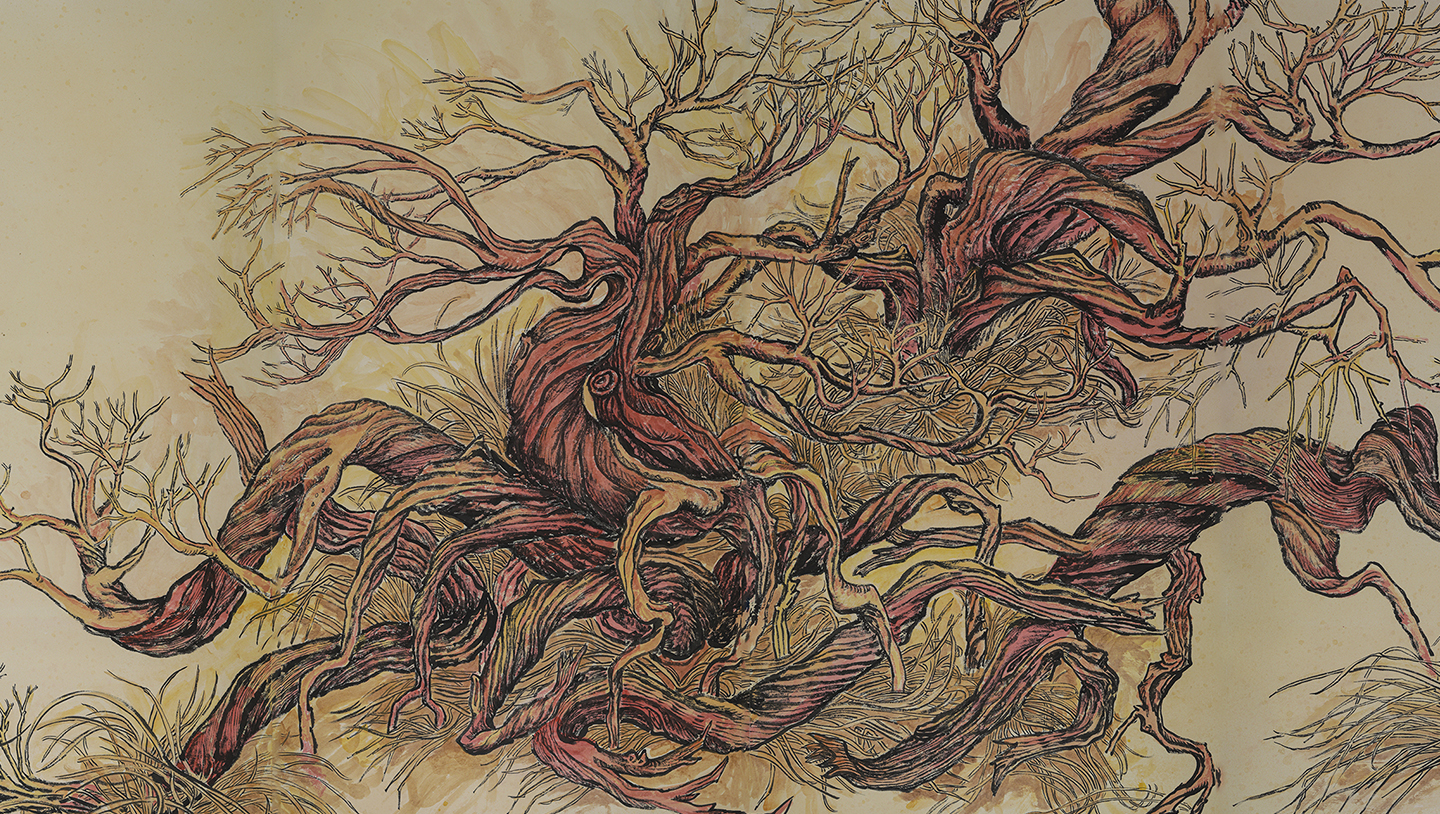
Soyolmaa Tsegmid’s art richly blends the visual symbolism and artistic techniques that she has honed through seven years of study at the Central Academy of Fine Arts, Beijing, with a focus in Chinese Traditional Painting.

Mirage of My Dreams, Soyolmaa’s first solo exhibition in Mongolia, reveals the artist’s fascination with the textures, colors, materials, and formations of the natural world: birds, plants, geological formations, and the Gobi region that she and her family call home. Each artwork takes your senses on a journey, from the birds-eye perspective of the landscape to the microscopic detail of a petal. This sense of movement and travel is intended to evoke the artist’s own efforts to recollect aspects of her past and discover what might remain in the present and future. The mirage here is Soyolmaa’s careful play between the identifiable detail and the imaginative scenes that she depicts. Temptingly beautiful and linked to the artist’s personal memories, these images makes us wonder: do these places exist more in the world or in our imagination?

Dr. Christianna Bonin, Curator

different mountains, different encounters

different mountains, different encounters

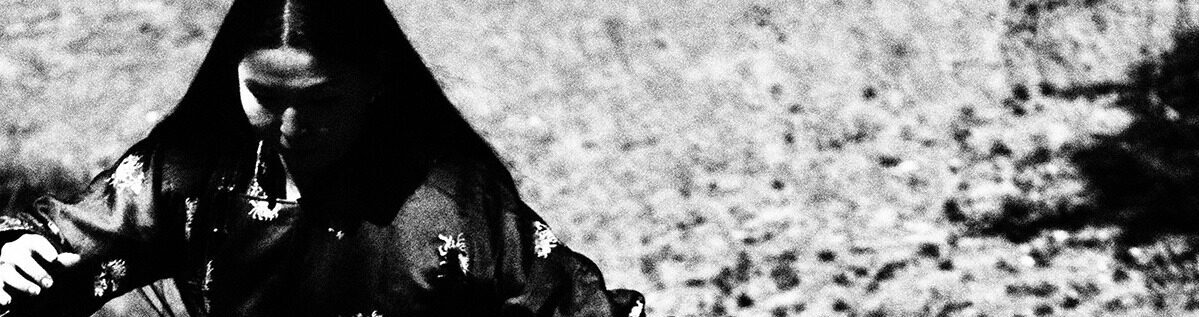
What does it mean to know the earth and your place within it? How does it feel to be disconnected from your surroundings—or conversely, intimately entwined with them? Nomin Zezegmaa, a multidisciplinary artist of Mongol descent, who works between the Netherlands, Mongolia and Germany, explores these questions for her first solo exhibition in Mongolia. 

Sacred, natural sites in Mongolia and the stories around them are shamanic; that is, they have a life of their own. From this perspective, trees, ravines, rivers, lakes, steppes, and stones are personified. Nomin’s art practice engages the land as a personified entity and in turn, becomes a means through which these seemingly different entities—the human and non-human—can begin to recognize each other.

different mountains, different encounters is a multi-part exhibition composed of sculpture, scent, sound, paintings, and video. Nomin’s primary point of entry into the topic comes through materials. Soils, natural fibers, wooden branches, stones and minerals have been gathered and reassembled to encourage reflection about our human bodies and their corollaries in the natural world. Together, the works testify to the artist’s exploration of Mongolia, its land, its beliefs, and its languages, likewise opening up possibilities for viewers to see, think, and imagine in turn.  

WHITE MILK PAINTS THE BLUE SKY

Lkham Gallery is pleased to present White Milk Paints the Blue Sky, on view from October 14 to October 26, 2023, in Paris, during the city’s biggest art week of the year. The exhibition invites eight contemporary artists from or living in Mongolia to consider how they envision the future and their place within it. It marks the first time that a Mongolian gallery has staged an exhibition of contemporary art at this scale abroad. The title evokes an ancient Mongolian practice of tossing milk towards the sky as a form of blessing, whenever crossing into a foreign land or embarking on a new journey or life phase. 

Curated by Dr. Christianna Bonin, the multi-disciplinary group show features works by Baatarzorig Batjargal, Bekhbaatar Enkhtur, Chayodu, Nomin Bold, Nomin Zezegmaa, Nyam-Ochir Oyunpurev, Odonchimeg Davaadorj, and Zula Tuvshinbat. For them, the future stretches between activism and conformism, and between empathy and hate. It is grounded in ancestral knowledge, but may not be anthropocentric. They offer new perspectives on art from a country that has thus far largely been known to the world through romanticized documentaries about nomadic life or the history of Chinggis Khan. Taken together, their practices represent a young generation of Mongolians intimately attuned to where they have been, where they are now, and where they are going. 

The exhibition opening will take place on October 14, 2023, from 17:00 to 22:00. It will be inaugurated by Nomin Chinbat, Minister of Culture, Mongolia, and Sebastièn Surun, Ambassador of France to Mongolia. A week of programming will follow the opening and include artist talks and conversations with the curator and other experts in contemporary art from Central Asia. 

Based in Ulaanbaatar, Mongolia, Lkham Gallery strives to promote contemporary art and culture of the Mongolian-speaking world and the broader Central Asian region. Lkham represents both emerging and mid-career artists working in a wide range of media. As the first gallery of its kind in Mongolia, Lkham envisions itself as an open door. Through regular exhibitions, publications, and a dynamic public program, the gallery facilitates dialogue between local artists and the public, and to galvanize patronage of local artists throughout its community, the region, and beyond. Lkham also regularly hosts lectures by experts working in a variety of fields and will provide residency opportunities for local and international artists. Founded in 2022 by entrepreneur Natsagsuren Mangalam, the gallery bears the name of her grandmother and references an important Buddhist protector deity.  

White Milk Paints the Blue Sky is supported by the International Art Development Association, a Paris-based, non-for-profit and non-governmental organization, dedicated to promoting contemporary art from Kazakhstan and from Central Asia more broadly. IADA encourages cultural exchange, residency programs, and artistic events related to this mission.  

You Exist Too Much

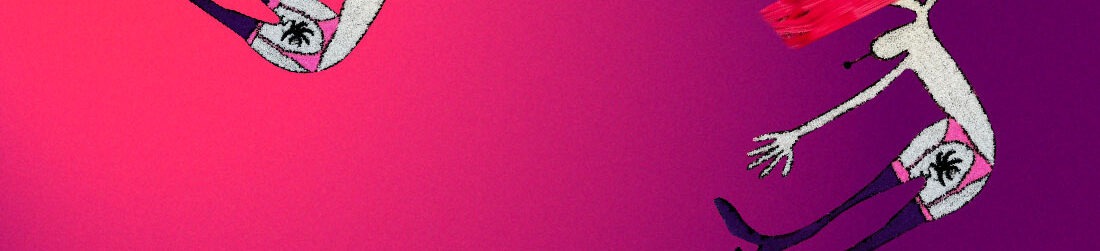
Zula Tuvshinbat’s (b.1988) debut solo exhibition brings the body into view using the stereotypically feminized medium of tufting. Though the objects are materially soft, the artist combines them with sharp metals and playfully provocative messages. Many of the works evoke the poses and language now-pervasive in social media and made possible by internet technology. Transformed into installations, tufted tapestries, and sculpture, Tuvshinbat’s art relates to a longer global history of craft as a form of critique. And in the digital age, if images of ourselves exist seemingly everywhere, how has our perspective of the body and sexuality changed?

Zula studies contextual painting at the Academy of Fine Arts in Vienna, where she lives and works.

In Every Sense

Curated by Dr. Christianna Bonin, this exhibition features new as well as early and never-before-seen paintings and textiles by celebrated Mongolian artist Sarantsatsralt Ser-Od (b. 1962, Ulaanbaatar). It is a vibrant presentation of the human ability to sense in multiple capacities.

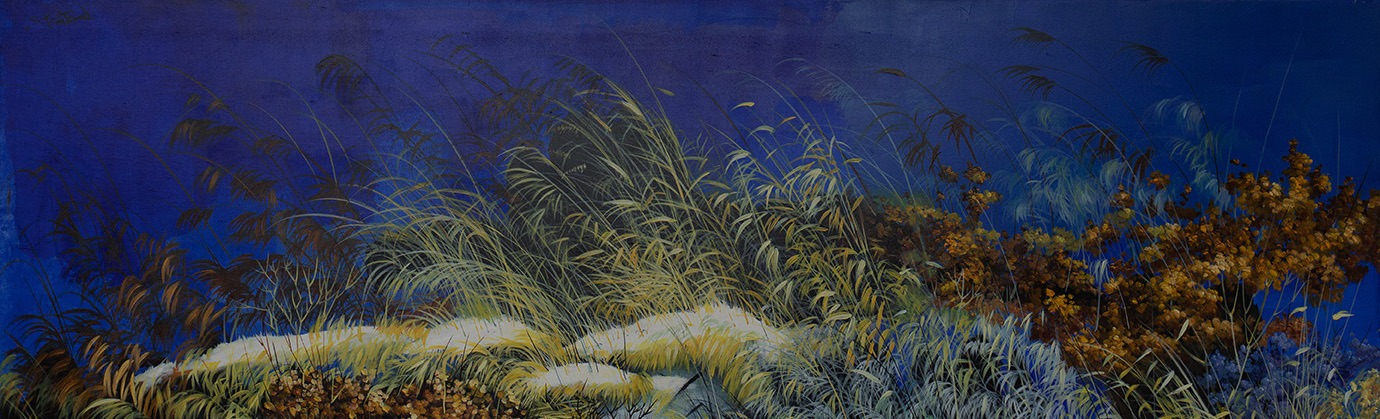
Over a career that spans nearly four decades, Sarantsatsralt has devoted herself to self-directed expression, highlighting a range of social, aesthetic, and political themes using an intrepid array of media. The current exhibition is organized into two sections: a group of the artist’s explorations of the self and the body, which is encompassed by a ring of her iconic landscape paintings.  At the focal point of the display is the painting I’m Right For Myself, In My Own Way, exhibited at Lkham for the first time. Made in 2000, the artist depicts herself standing on her hands, undisturbed by but dissimilar from the onlookers around her. “I made this at a moment when I felt misunderstood by the world, and did not yet understand myself,” the artist said. It is on the occasion of In Every Sense that she has decided to revisit and display this younger version of herself. The earliest work in the show, Fire, from 1993, was woven on handmade looma tactile rendering of human intimacy.

Wrapped around these works are several outstanding examples of her recent landscapes, which reverberate with the season’s colors, textures, and emotions.

Present Past

In this exhibition of recent works, entitled Present Past, Otgontuvden Badam offers a vision of today’s Mongolia positioned between history and the present, and in the process, encourages each of us to orient ourselves within these temporal moments. 

There is something mesmerizing about Otgontuvden’s art that can make it difficult for any viewer not to feel like they are embarking on a journey of time and place. Trained in the European style of academic painting, Otgontuvden brings an emphasis on color, narrative, and gesture to themes and myths from Mongolian history. Paintings such as The Past is Never Really Past, is particularly effective, as he blends identifiable images of naturalistic warriors who are kneeling in prayer, but raises the question of to whom or what these historical figures bend in supplication. Both literally and figuratively, the painting also asks its viewers to reflect on their own relationship to their backgrounds and values. 

Over the past year, Otgontuvden has also shifted his practice, leading him to experiment with portraying moments from everyday life. In his paintings Esui and Gunchmaa and Esunerdene, we see photograph-like snapshots of the artist’s personal circle, lost in thought or in moments of reflection and intimacy. Though the portraits are individual, the scenes are common to us all. They demonstrate the human abilities to touch, to feel, and to think–sensations that transcend the past and present. 

The Endless Knot

The group show features works by Aryuna Bulutova (in collaboration with Davaajargal Tsaschikher), Baatarzorig Batjargal, Bulgantuya Dechindorj, Nomin Bold, Nomin Zezegmaa, and Odmaa Uranchimeg, curated by Christianna Bonin and Timur Zolotoev.

Bringing together works by artists from Mongolia and Buryatia, the show explores the imaginaries formed by shared culture and spirituality. Drawing inspiration from one of the Eight Auspicious Symbols of Buddhism, the exhibition invites viewers to consider the complex and interwoven nature of our world. Through their unique perspectives, the artists delve into the notion of interconnectedness and the endless cycles of life, death, and rebirth.

FIRST STROKE

First Stroke features new works by Ulaanbaatar-based artist and calligrapher Oyunpurev Nyam-Ochir (b. 1985). Unique among practitioners who trained in Mongolia, Nyam-Ochir first studied painting at the Institute of Fine Art in Ulaanbaatar, and then learned Mongolian calligraphy according to the rigorous program of «Bichig Soyol». As a result, his art makes us aware that texts can also be images, and images can also be texts. First Stroke breaks new ground as the first large-scale display to focus on this aspect of his artistic practice.

Unlike the black and red ink brushstrokes of traditional calligraphy, the current exhibition features works that use a broad palette to evoke a wider range of emotions and gestures. However, similar to traditional calligraphy, it is not content but rather primarily a negotiation of form, rhythm, and movement that give each work its value.

Nyam-Ochir uses free strokes and movement to create paintings that hover between legibile word and free association. While the works share characteristics of twentieth-century Western abstract painting, he arrives at this point by a different route: through a dynamic exploration of historic Mongolian calligraphic technique, rather than a total rejection of clear form and narrative. Following the moves of his brushstroke, you can reimagine the creative process behind the artwork in front of you.

    0
    Order Summary
    Your cart is empty